Band vs DJ for Your Wedding: How to Choose
12 June 2026 · 8 min read
Quick answer: For most Australian weddings a DJ is the more affordable choice at roughly $1,500 to $3,000, while a live band typically costs $2,900 to $8,000 or more. A DJ plays the original tracks your guests know and adapts easily to requests; a band brings energy and spectacle but a smaller song range. A popular middle ground is a DJ for the reception plus an acoustic musician for the ceremony.
| DJ | Live band | |
|---|---|---|
| Typical cost | $1,500–$3,000 | $2,900–$8,000+ |
| Song range | Vast — any recorded track | Limited to their repertoire |
| Atmosphere | Familiar hits, easy requests | High energy, live spectacle |
| Space & power | Minimal | Needs a stage, power and room |
The music is what turns a lovely reception into a night nobody wants to end. Choosing between a live band and a DJ is one of the bigger entertainment decisions you will make, and there is no single right answer, only the right fit for your day.
This guide walks through the real differences in the wedding band vs DJ debate, from cost and energy to song variety, space and power, so you can book with confidence rather than second-guessing yourself later.
The quick version
A live band brings energy, spectacle and the unmistakable thrill of music played in the room. A DJ brings near-endless song variety, seamless transitions and flexibility for a fraction of the footprint. Most couples lean one way based on the atmosphere they picture, then check it against their budget and venue. Let's break down what actually separates the two.
Cost
Cost is usually the first deciding factor, and it is where the two options differ most. As a rough guide, a professional DJ is the more affordable choice, while a live band sits at the higher end because you are paying multiple musicians, their gear and often a longer setup.
A few things shift those numbers:
- Band size. A three-piece is far more affordable than an eight-piece with horns and backing vocals. More members means more cost, more space and more power.
- Hours of performance. Bands typically play in sets with breaks, so ask how many hours of live music you actually get and what fills the gaps.
- Travel and accommodation. Regional and destination weddings often add travel fees for either option, but more so for a full band.
- Add-ons. Lighting, extra speakers, ceremony or canape-hour coverage and a roaming MC can all change the final figure.
Treat any figures you see online as approximate starting points. The honest move is to get itemised quotes so you are comparing like with like. Browsing options for wedding bands and wedding DJs side by side will quickly show you the spread for your region and date.
Energy and atmosphere
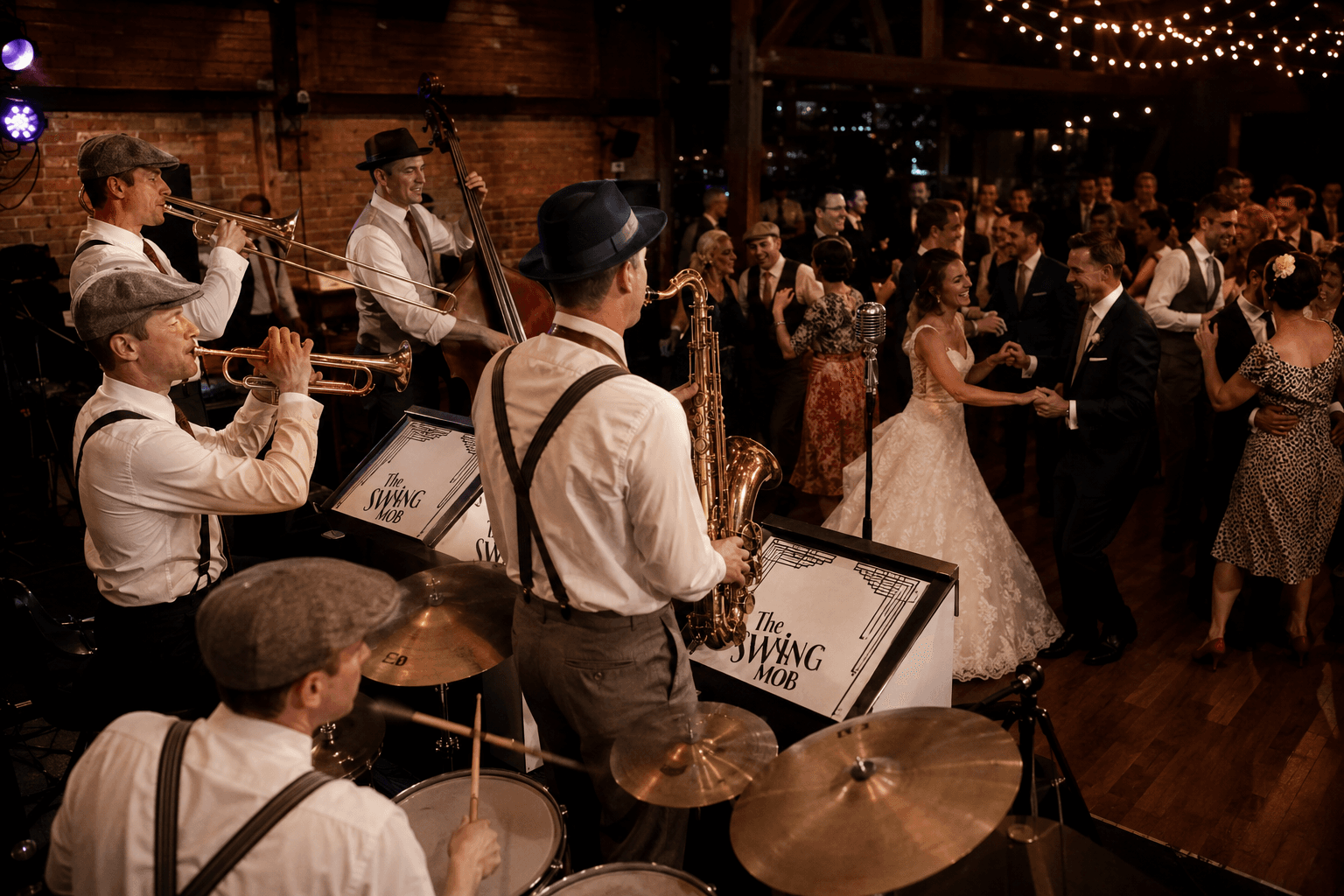
This is where the heart of the decision lives. A live band creates a sense of occasion you can feel in your chest: real instruments, a frontperson reading the crowd, the spontaneous big finish. For many couples that spectacle is the whole point, and a great band can make even a smaller wedding feel like an event.
A DJ delivers a different kind of energy, one built on momentum. Because there are no set breaks and no songs being learned on the fly, a skilled DJ keeps the dance floor moving continuously, mixing one track into the next so the mood never drops. If you want the floor packed from the first beat to the last, a DJ has a clear advantage in flow.
Neither is inherently more fun. A flat band will empty a room just as fast as a DJ who misreads the crowd. The talent and experience of the individual matters far more than the format.
Song variety and requests
A DJ can play almost anything ever recorded, in the original version your guests know, and pivot instantly when the energy calls for it. If your guest list spans grandparents who love the classics and friends who want the latest hits, that flexibility is hard to beat.
A band plays its own repertoire, interpreted live, which is part of the magic but also a limit. You generally cannot request an obscure track on the night and expect it played note for note. The trade-off is character: a live version of a familiar song can be a genuine highlight. Some couples get the best of both by asking their band about a DJ option during breaks, which we cover below.
Space and power needs
This is the practical check that catches couples out, so raise it early with your venue and your supplier.
- A DJ needs relatively little: a table or booth, a small footprint and standard power. Easy for almost any venue, including marquees and tight inner-city spaces.
- A band needs a proper stage or cleared area, room for instruments and amps, and significantly more power, sometimes a dedicated circuit or generator at outdoor and marquee weddings.
Ask your venue about noise limits and curfews too. Some councils and function spaces cap volume or require live music to finish by a set time, which can affect a loud band more than a DJ. Confirm load-in access, parking and how long setup and pack-down take, especially if another event uses the room before or after yours.
When to book both
Plenty of couples do not choose at all. Booking both a band and a DJ is increasingly popular and can give you the best of each, particularly at larger weddings with the budget and space for it. Common ways to combine them include:
- The band plays the prime-time sets for live energy, and the DJ covers the breaks and the late-night party so the music never stops.
- A DJ handles the ceremony and canape hour, then the band takes the reception.
- The band finishes its sets and the DJ runs the final stretch, when guests often want familiar dance hits at full tilt.
If this appeals, look for suppliers experienced in working alongside each other, or a single company that offers both. Exploring full-service wedding entertainment options can make coordination far simpler than booking two separate acts who have never met.
MC considerations
Someone needs to run the night: announcing your entrance, cueing speeches, calling the cake cut and the first dance, and keeping the timeline on track. Many DJs are comfortable doubling as MC and will do it well, which can save you booking a separate person. Bands vary more, so do not assume the frontperson will handle announcements.
Whoever takes the role, ask to hear their announcing style. You want clear, warm and brief, not a cheesy game-show host. Give them a running sheet, correct name pronunciations and a clear sense of how much they should say. If neither your band nor DJ is a confident MC, a trusted friend or a professional can fill the gap.
Reading the room, must-play and do-not-play lists
The single biggest predictor of a full dance floor is a supplier who can read the room. The best bands and DJs watch how guests respond and adjust in real time, dropping a sure-fire crowd-pleaser when energy dips and easing off when people need a breather. Ask any candidate how they handle a slow start, and listen for an answer grounded in experience.
Help them help you with two simple lists:
- A must-play list of the songs that matter most: your first dance, parent dances, and a handful of tracks you know will fill the floor. Keep it focused rather than a rigid hour-by-hour script that leaves no room to read the crowd.
- A do-not-play list of anything you cannot stand or that carries awkward associations. This is just as important, and a good supplier will welcome it.
Then trust your professional with the rest. The couples who micromanage every track often end up with a stiffer night than those who set clear guardrails and let an experienced act do what they do best.
Making the call
Picture the moment you most want to remember: a band lifting the room with a live finale, or a DJ holding a packed floor deep into the night. Match that to your budget, your venue's space and power, and the variety your guests will love. Whichever way you lean, book early, meet the actual performers who will be at your wedding, and put the details in writing. When you are ready to compare, start with our listings of wedding bands and wedding DJs and shortlist a few that suit your style.
Frequently asked questions
- Is a DJ or a band better for a wedding?
- It depends on budget and vibe. A DJ is cheaper, plays the exact songs guests know and handles requests easily; a live band brings energy and a sense of occasion but costs more and has a narrower repertoire. Many couples book a DJ for the reception and a soloist for the ceremony.
- How much does a wedding DJ cost in Australia?
- A wedding DJ typically costs $1,500 to $3,000 for around five hours of reception coverage, with premium DJs charging more. Adding MC duties or ceremony and cocktail-hour sound usually increases the price.
- How much does a wedding band cost in Australia?
- A live wedding band generally costs $2,900 for a four-piece up to $8,000 or more for larger or premium acts covering a full reception. Travel outside a capital city and longer sets add to the cost.