
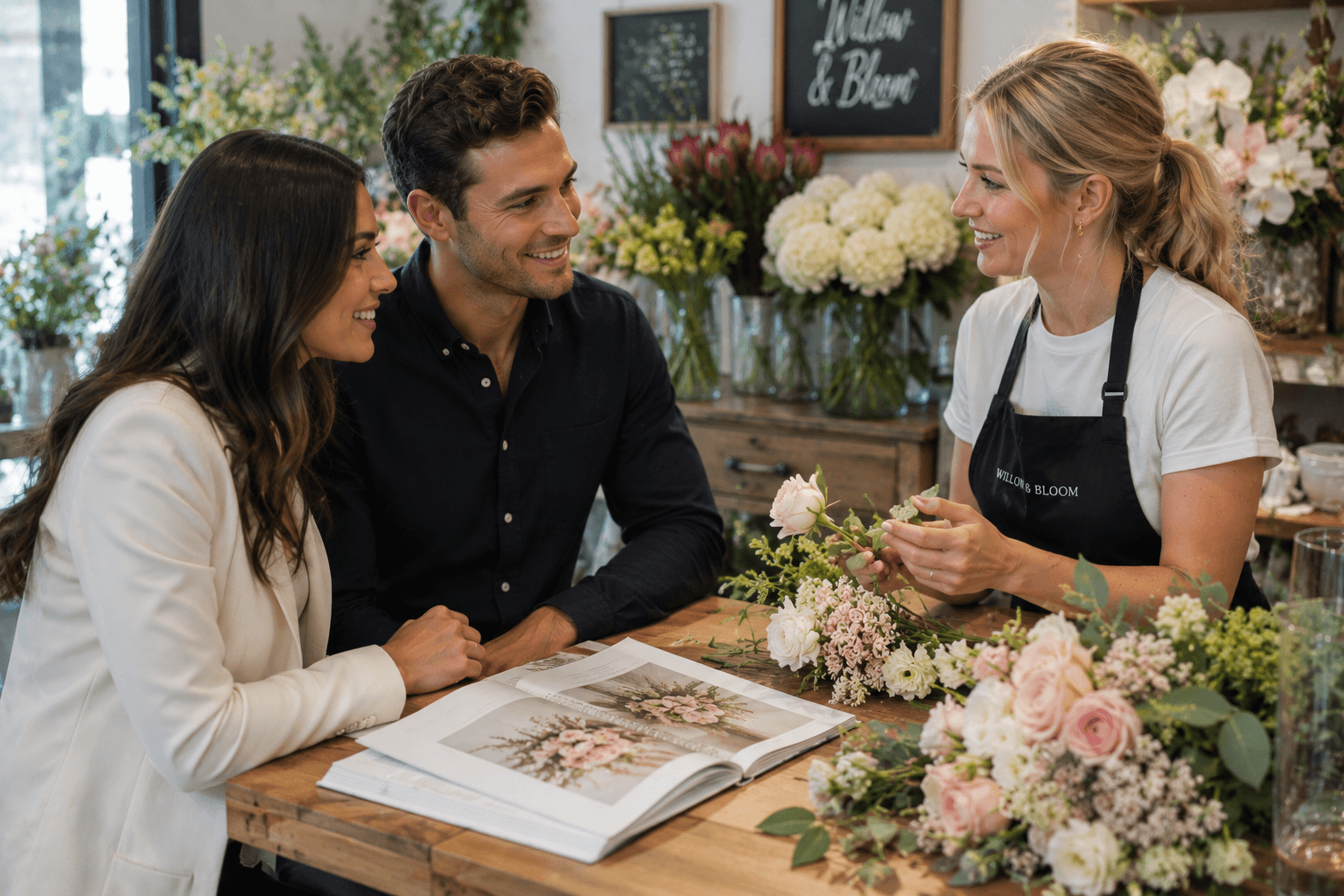
Wedding Flowers 101: How to Choose a Florist and Save on Blooms
17 July 2026 · 8 min read
Quick answer: Choose a wedding florist whose portfolio matches your style and who is transparent about cost — flowers can range from a single bouquet to elaborate installations. Share your colours, venue and budget early, ask what's achievable seasonally (in-season, locally grown blooms cost less), and confirm delivery, setup and whether arrangements can be repurposed from ceremony to reception. Australian couples spend around $2,600 on flowers and styling on average.
Flowers set the mood of your wedding more than almost any other detail, and they are also one of the easiest places to overspend without realising it. The good news is that a little planning, and the right florist, can stretch your budget a surprisingly long way.
This guide covers exactly how to choose a wedding florist in Australia, how to work with the seasons rather than against them, what a floral package actually includes, and the clever swaps and tricks that save money without making your day look cheap.
Work with the seasons to save serious money
The single biggest lever you have over flower costs is timing. In-season, locally grown blooms are abundant, fresher and far cheaper than flowers flown in out of season. Out-of-season favourites have to be imported or hot-housed, which can push the price up dramatically and reduce how well they hold up on the day.
Australia's growing seasons run opposite to the northern hemisphere, so be careful copying overseas inspiration. A broad guide to what tends to be plentiful and affordable:
- Spring (September to November): ranunculus, peonies (brief and pricey but in season), sweet peas, tulips, blossom and a huge range of natives.
- Summer (December to February): dahlias, hydrangeas, sunflowers, gardenias and hardy tropicals that cope better with heat.
- Autumn (March to May): chrysanthemums, dahlias, roses, berries and rich, warm tones.
- Winter (June to August): ranunculus, anemones, hellebores, natives and plenty of lush foliage.
Smart in-season swaps
If you love a flower that is out of season or simply expensive, a good florist will offer a lookalike that delivers the same feeling for less. Popular swaps include using garden roses or ranunculus instead of peonies, lisianthus in place of roses, and spray roses or carnations (yes, really, the modern varieties are beautiful) to add volume cheaply. Leaning on Australian natives and foliage, which are hardy, dramatic and homegrown, is one of the best value moves you can make.
The lesson is simple: tell your florist the look and mood you want, not a rigid shopping list. When you give a skilled designer freedom to use what is best at the market that week, you get fresher flowers and a friendlier price.
What a floral package actually includes
Flower quotes can look wildly different because florists package things differently. Before you compare prices, make sure you are comparing the same scope. A typical full-service wedding floral package may cover:
- Personal flowers: the bridal bouquet, bridesmaid posies, buttonholes, corsages and flower crowns or flower-girl pieces.
- Ceremony flowers: an arbour or arch installation, aisle markers, and any urns or pedestals at the front.
- Reception flowers: centrepieces, a bridal-table runner or arrangement, cake flowers and styling for the bar, sign-in table or grazing table.
- Logistics: delivery, set-up, the cost of any hired vessels and stands, and the bump-out or pack-down at the end of the night.
That last point matters. Delivery, installation and hire of structures can be a significant slice of the total, so always ask whether they are included or charged on top. Some florists are pure design-and-deliver, while others double as wedding stylists and can handle your whole look, including non-floral styling. If you want someone to manage the broader room, candles, linen, signage and props, you may prefer a florist who works alongside wedding decorators or offers that service themselves.
Repurpose your ceremony flowers at the reception
Here is the trick that saves the most money for the least effort: your ceremony flowers only need to look beautiful for around twenty to thirty minutes, then they sit unused while everyone moves to the reception. A good florist plans from the start to move those blooms across.
Common ways to make your flowers work twice:
- Aisle arrangements become bridal-table centrepieces or are clustered at the entrance.
- The ceremony arbour is relocated behind the bridal table or over the cake as a backdrop.
- Bridesmaid bouquets are popped into vases and used to dress the bridal or guest tables.
- Pedestal or urn arrangements are repositioned at the reception entrance or on the bar.
To make this work smoothly, you will need someone responsible for the transfer and the timing to allow it, so raise it early. Ask whether your florist offers a paid flip or relocation service, or whether your venue coordinator can manage it. Designing your ceremony pieces in vessels that double as reception decor, rather than ground-staked installations, makes the move far easier.
Questions to ask before you book
Once you have a shortlist of florists whose style you love, a quick consultation tells you whether they are the right fit. As you browse and compare wedding florists, come armed with these questions:
- Are you available on our date, and how many weddings do you take per weekend?
- What is your minimum spend, and what does it realistically cover?
- Based on our mood board, what is in season and good value around our date?
- What would you swap to save money without changing the overall look?
- Are delivery, set-up, hire items and pack-down included or charged separately?
- Can you repurpose our ceremony flowers at the reception, and is there a fee?
- How will the flowers cope with the temperature and conditions on our day?
- What is your deposit, payment schedule and cancellation policy?
- Can we see photos of real weddings you have done, not just styled shoots?
Insisting on photos from actual weddings, rather than only polished styled shoots, shows you what they deliver under real conditions and budgets, which is exactly what you will be working with.
Hot-day survival tips
An Australian summer or an outdoor ceremony can wilt delicate flowers in under an hour. Plan for the heat and your blooms will look fresh from the first kiss to the last dance.
- Choose heat-hardy varieties. Natives, orchids, dahlias, carnations, sunflowers and most foliage cope far better than peonies, hydrangeas, sweet peas and gardenias, which sulk in the sun.
- Keep flowers cool until the last moment. Ask your florist to deliver as late as practical and store bouquets in a cool, shaded room or air-conditioning, never in a hot car.
- Hydrate the stems. Bouquets sitting in water until you walk down the aisle last much longer than ones left out for photos all morning.
- Shade the installations. Position arbours and arrangements out of direct afternoon sun where you can, and avoid placing centrepieces in baking marquees without airflow.
- Have a back-up plan for wind and heat at exposed beach or paddock venues, such as weighted vessels and sturdier blooms.
Bringing it together
Choosing a wedding florist well comes down to three things: pick someone whose style genuinely moves you, work with the seasons and trust them to swap cleverly, and plan from the outset to make every stem earn its keep by repurposing it. Add in a sensible hot-day plan and a clear written quote, and you will get flowers that look far more expensive than they cost.
When you are ready to start comparing, browse our directory of Australian wedding florists and shortlist a few whose work makes you stop and look twice.
Frequently asked questions
- How do I choose a wedding florist?
- Find a florist whose portfolio matches your style, then share your colours, venue, season and budget upfront. Ask what's achievable within your budget, whether blooms are seasonal, and if ceremony arrangements can be moved to the reception to stretch your spend further.
- How much do wedding flowers cost in Australia?
- Australian couples spend around $2,600 on flowers and styling on average, though it ranges widely — a simple bouquet-and-buttonholes package costs far less than arches and elaborate centrepieces. Seasonal, locally grown flowers and greenery are the most cost-effective choices.
- How can I save money on wedding flowers?
- Choose seasonal, locally grown blooms, lean on greenery and foliage (cheaper than premium flowers), repurpose ceremony arrangements at the reception, and concentrate your budget on a few high-impact pieces rather than spreading it thinly across every table.