The Ultimate Australian Wedding Planning Checklist
6 June 2026 · 7 min read
Quick answer: A wedding checklist works backwards from your date in stages: 12+ months (set the budget, book the venue and celebrant), 6 to 9 months (photographer, caterer, florist, attire), 3 to 6 months (invitations, cake, transport, lodge your Notice of Intended Marriage) and the final month (confirm numbers, final fittings, run sheet). Booking cornerstone suppliers early is the single most important step.
Congratulations on the engagement. The fastest way to feel calm about a wedding is to turn it into a sequence of small, ordered decisions. This wedding planning checklist walks you through what to do from the moment you say yes right up to the wedding day, in roughly the order an Australian couple should tackle each task.
Timing here is qualitative rather than prescriptive. A long engagement gives you room to breathe; a short one simply means you compress the same steps into fewer months. Either way, the order of decisions matters more than the calendar.
Just engaged: the foundations
Before you book anything, settle three things between you. They shape every decision that follows.
- Budget. Agree on a realistic total and who is contributing. The venue and catering usually take the largest share, so be honest early.
- Guest count. A rough headcount drives both your budget and your venue options. A 40-person celebration and a 150-person reception are different projects entirely.
- Style and season. City rooftop, coastal marquee, country winery, backyard at home. Decide the broad direction and the time of year you are aiming for.
If the logistics already feel overwhelming, this is the point to consider engaging a professional. A good wedding planner can manage the budget, the timeline and the supplier wrangling on your behalf, and is especially worthwhile for destination or large weddings.
About 9 to 12 months out: book the big three
This is the period that makes or breaks your stress levels. The rule is simple: lock the things that can only host one wedding at a time, and lock them in order.
1. Secure your venue first
Everything else flows from where and when. Popular wedding venues book out a year or more ahead, especially for spring and autumn Saturdays, so this is your true first booking. Confirming the venue fixes your date, which then lets you approach every other supplier with certainty. Check what is included: some venues bundle catering, tables and styling, while dry-hire spaces leave you to arrange those separately.
2. Confirm your celebrant
In Australia, your marriage must be solemnised by an authorised marriage celebrant (or a recognised minister of religion). Good celebrants are booked early, and there is a legal step you cannot skip: the Notice of Intended Marriage (NOIM) must be lodged with your celebrant at least one calendar month before the ceremony, and no more than eighteen months prior. Sort your celebrant well ahead so the paperwork is never a last-minute scramble.
3. Lock in catering and the photographer
If your venue does not provide food, secure your wedding catering next, as caterers also work to limited daily bookings. In the same window, book your wedding photographer. Talented photographers are often reserved a year out, and your photos are the one element you keep for life, so do not leave this late.
About 6 to 9 months out: build out the team
With the essentials locked, fill in the suppliers who shape the look and feel of the day.
- Videographer if you want film as well as photos.
- Florist and stylist for bouquets, ceremony arrangements and reception styling.
- Music, whether that is a band, a DJ or a ceremony musician.
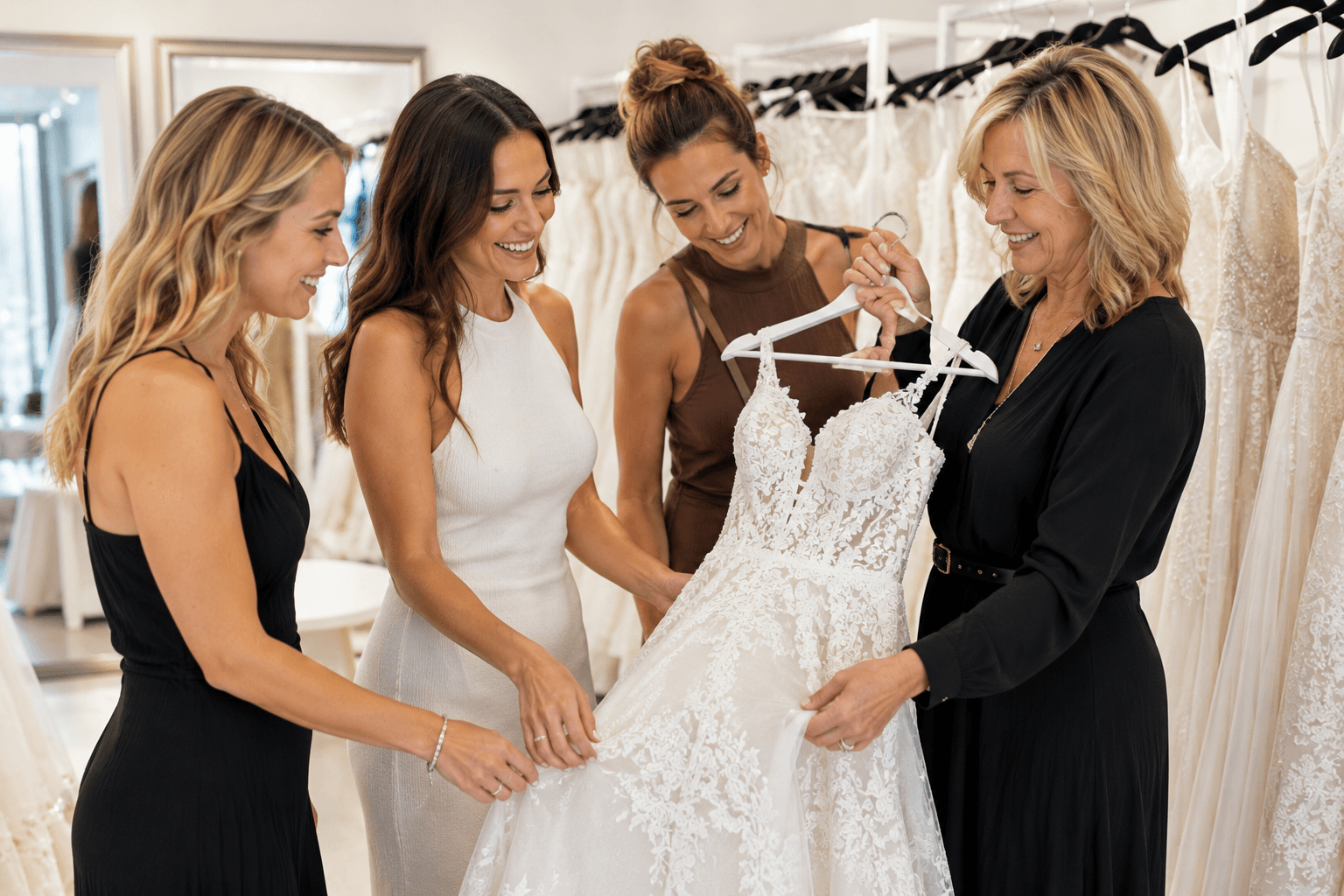
- Wedding attire. Order the wedding dress and suits now. Gowns frequently take many months to arrive and then need fittings, so this is genuinely time-sensitive.
- Cake and any dessert table.
- Accommodation and transport, including a block of rooms for interstate guests if your venue is regional.
This is also the moment to send save-the-dates, particularly for a destination wedding or a date during school holidays when guests need to plan travel.
About 3 to 6 months out: confirm the details
The framework is in place; now you refine it.
- Send invitations and set up a way to collect RSVPs.
- Plan the menu and tasting. Confirm courses, drinks packages and dietary requirements with your caterer or venue.
- Book hair and makeup, and schedule a trial.
- Arrange celebrant rehearsal details and start drafting your ceremony and vows.
- Buy rings and allow time for sizing or engraving.
- Organise legal paperwork. Ensure your NOIM is lodged and gather the identity documents your celebrant requires.
About 1 to 2 months out: the run sheet
Detail is everything now. Confirm final numbers with your venue and caterer, since this usually drives your final invoice. Build a run sheet for the day, listing timings, supplier arrival slots and contact numbers, and share it with everyone involved. Finalise the seating plan, confirm payment schedules, and chase any outstanding RSVPs. Collect your marriage licence requirements and confirm the rehearsal time with your celebrant and bridal party.
The final week and the wedding day
Aim to have nothing left but enjoyment. In the last week, confirm timings with every supplier one final time, delegate small jobs such as collecting hire items or final payments, and pack an emergency kit with safety pins, pain relief, a sewing kit and chargers. Give your run sheet to whoever is coordinating, then step back.
On the day itself, eat breakfast, stay hydrated and trust the team you have spent months assembling. The point of a wedding planning checklist is to do the worrying in advance so that, when the morning arrives, your only job is to turn up and marry the person you love.
A quick note on order
If you remember one thing, remember the sequence: venue and date first, then celebrant, then catering and photographer, then everyone else. Booking out of order is how couples end up with a date no supplier is free for, or a venue that clashes with the photographer they had their heart set on. Follow the order, map each task to the right supplier category, and the rest is detail.
Frequently asked questions
- What should I do first when planning a wedding?
- Start with your budget and guest count, because both drive every other decision, then lock in your date and venue. With those set, book your celebrant and photographer next — they're the suppliers that fill up earliest, especially for peak-season Saturdays.
- What is a realistic wedding planning checklist timeline?
- Work in stages: 12+ months for budget, venue and celebrant; 6 to 9 months for photographer, caterer, florist and attire; 3 to 6 months for invitations, cake, transport and your Notice of Intended Marriage; and the final month for numbers, fittings and the run sheet.
- What do couples forget when planning a wedding?
- Commonly overlooked items include a wet-weather plan, a day-of run sheet, marriage paperwork (the NOIM and two witnesses), guest transport and accommodation, vendor meals, and a contingency of around 10% of the budget for last-minute surprises.