Choosing the Right Marriage Celebrant for Your Australian Wedding
6 June 2026 · 7 min read
Quick answer: Choose a marriage celebrant who is Commonwealth-authorised and whose style suits your ceremony — from relaxed and funny to formal and traditional. Meet a few, read reviews, and ask how they personalise the ceremony, what's included, and how they handle the legal paperwork (your Notice of Intended Marriage must be lodged at least one month before the day). Australian celebrants typically charge around $800 to $2,000.
Your celebrant does far more than say a few words and sign the register. They set the tone for the most important moment of your day, guide you through the legal requirements, and turn your story into a ceremony that feels unmistakably yours. Getting the choice right matters.
If you are wondering how to choose a celebrant for your Australian wedding, this guide walks you through the key decisions, from the type of celebrant you need to the questions that reveal whether they are the right fit.
Authorised civil celebrant vs minister of religion
In Australia, a legally valid marriage must be solemnised by an authorised celebrant. There are three broad categories, and understanding the difference is the first step.
Commonwealth-registered civil celebrants
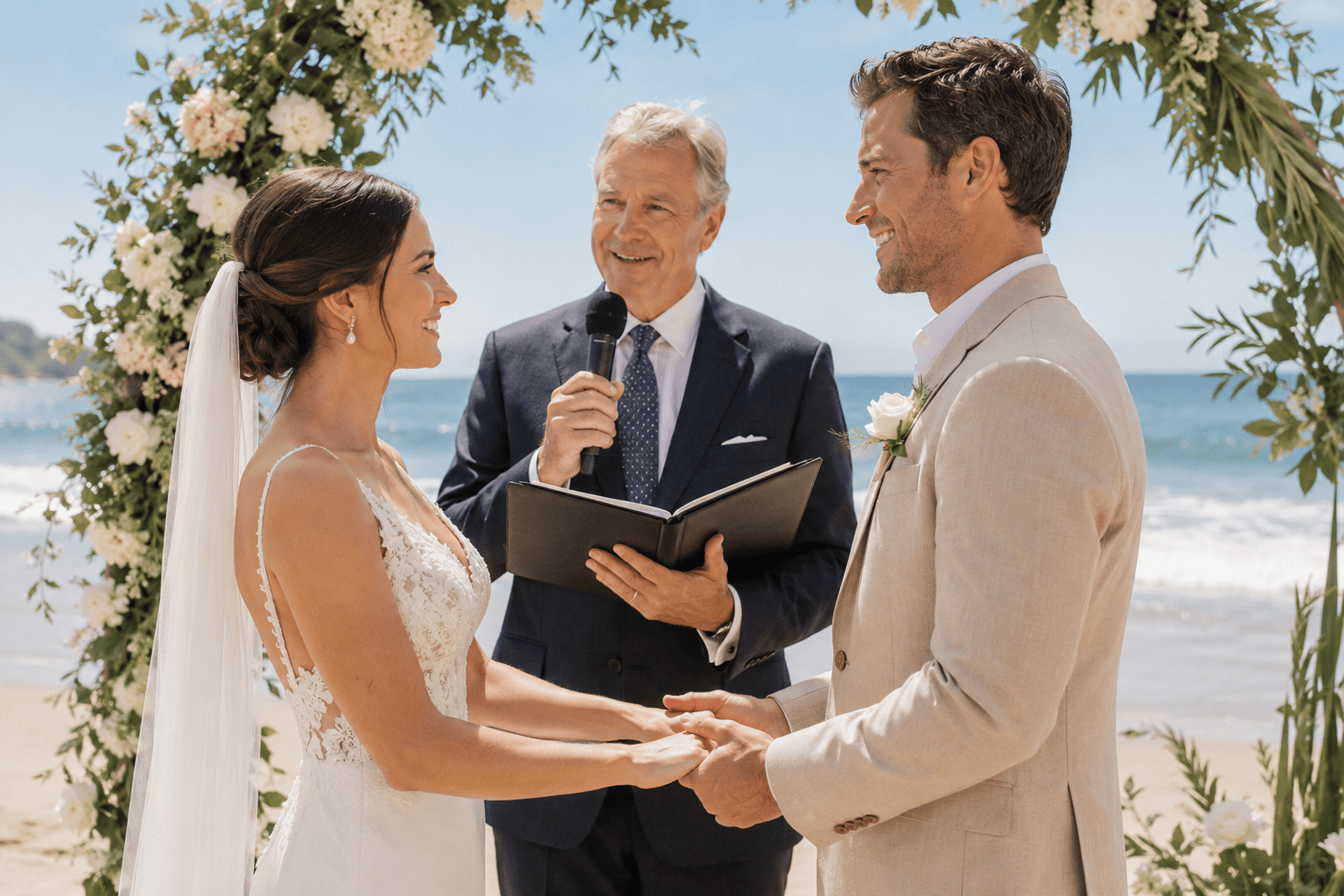
Civil celebrants are independent professionals authorised by the Attorney-General's Department to perform marriages anywhere in Australia. They are not tied to any religion or venue, which gives you enormous freedom: you can marry on a beach, in a backyard, at a winery or in a city rooftop bar. A civil ceremony can be entirely secular, lightly spiritual, or weave in cultural traditions, depending on what suits you. For most couples planning a non-religious or personalised wedding, a civil celebrant is the natural choice. You can browse marriage celebrants across Australia to see the range available.
Ministers of religion
If your faith is central to your relationship, a minister, priest, rabbi, imam or other religious official registered to perform marriages may be the right path. Religious ceremonies usually follow the structure and liturgy of that faith, and may need to take place in a church, temple or other place of worship. Some faiths also have requirements such as membership, pre-marriage courses or particular vows, so ask early about what is expected.
State and territory officers
State and territory Births, Deaths and Marriages offices also employ officers who can perform short, no-frills civil ceremonies, often at a registry. This is a budget-friendly option for couples who want the legal marriage without an elaborate ceremony, though personalisation is limited.
Whichever category you choose, always confirm the person is currently authorised. A genuine celebrant will be listed on the official register, and a reputable one will happily confirm their registration details.
Matching style and tone to your day
Two celebrants can perform the exact same legal ceremony and create completely different experiences. Style is where the magic happens, so this is worth real attention.
Think honestly about the mood you want. Some couples want warmth and gentle emotion; others want laughter, irreverence and a celebrant who can read a crowd like a comedian. Some prefer a calm, elegant and traditional feel. None is better than another, but a mismatch is jarring, so look for someone whose natural personality aligns with yours.
The best way to gauge style is to see a celebrant in action. Ask to watch a video of a recent ceremony, or read full reviews rather than star ratings alone. Pay attention to:
- Their voice and pacing Do they sound natural and relaxed, or scripted and stiff?
- How they handle humour Is it warm and inclusive, or does it risk falling flat?
- How they include guests Do they make everyone feel part of the moment?
- Their presence Are they confident on a microphone without overshadowing the couple?
Remember that the ceremony, however brief, is the only part of the day where your celebrant is centre stage. You want someone who elevates the moment rather than distracts from it.
How ceremony personalisation and vow writing works
One of the great advantages of a modern civil ceremony is how much of it you can shape. A skilled celebrant treats the ceremony as a blank canvas, with only a few legally required elements that must be included.
Telling your story
Most celebrants begin with a questionnaire or a relaxed meeting to learn how you met, what you love about each other, and the milestones that brought you here. They use this to craft a narrative that feels personal, sometimes funny, sometimes moving, but always recognisably you. Good celebrants write a fresh ceremony for every couple rather than recycling a template.
Rituals and inclusions
You can add symbolic rituals such as a ring warming, handfasting, a unity candle, a sand ceremony, or cultural elements that honour your heritage. You can include readings, involve children or family members, and decide how formal or casual the language feels. Your celebrant should offer suggestions while respecting that the final shape is yours.
Writing your vows
Vows are where personalisation peaks. You generally have three options:
- Write your own The most personal route, where each of you prepares vows in your own words.
- Choose from provided examples Helpful if writing feels daunting; you select and adjust wording you connect with.
- A blend Personal promises layered over a familiar structure.
A good celebrant will coach you on length, balance and tone, and may suggest you keep personal vows to a similar length so neither of you feels outshone. They can also keep your vows confidential from your partner until the day if you want the surprise. If you are unsure where to start, ask your celebrant for prompts; experienced wedding celebrants do this constantly and can make it painless.
What the celebrant handles legally
Beyond the words, your celebrant is responsible for ensuring your marriage is legally valid. This is a significant part of their role and a key reason to choose someone experienced and organised.
Your celebrant will typically manage the following:
- The Notice of Intended Marriage (NOIM) This must be lodged with your celebrant within a set window before the wedding, generally at least one month and a day beforehand, and no more than eighteen months. Your celebrant will guide you on timing and what documents you need, such as birth certificates or passports and, if relevant, divorce or death certificates.
- Checking eligibility and identity Confirming you are both free to marry and verifying your identification.
- The legally required wording Certain words, known as the monitum, must be spoken by the celebrant, and you must each say a specific legal phrase declaring you take the other as your spouse. Everything else can be personalised.
- The signing and certificates Arranging your two witnesses, who must be over eighteen, and completing the marriage certificates on the day.
- Registering the marriage Lodging the paperwork with the relevant state or territory registry so your marriage is officially recorded, after which you can apply for an official marriage certificate.
A diligent celebrant will explain all of this clearly, remind you of deadlines, and double-check documents well before the day so there are no surprises.
Questions to ask before you book
Before signing a contract, have a conversation, in person or by video call, and ask:
- Are you currently authorised, and how long have you been a celebrant?
- How many weddings do you take in a weekend, and will I be your only couple that day?
- How do you personalise the ceremony, and can I see a sample or video?
- How involved can we be in writing vows and choosing inclusions?
- What exactly is included in your fee, and what happens if you fall ill?
- Do you provide a PA system and microphone for larger groups?
- How and when do we lodge the NOIM and required documents?
Listen as much to how they answer as to what they say. Warmth, clarity and genuine interest in your story are strong signals.
Trust your instincts
Credentials, reviews and pricing all matter, but the final decision often comes down to feel. You will share an intimate, emotional moment with this person in front of everyone you love, so choose someone who makes you feel comfortable, understood and excited. When you find that match, you will know. Start by exploring celebrants near your wedding location and reach out to a shortlist for a chat.
Frequently asked questions
- How do I choose a marriage celebrant?
- Pick a Commonwealth-registered celebrant whose tone matches the ceremony you want, then meet a few to compare style and rapport. Ask how they personalise the ceremony, what their fee includes, and how they manage the legal paperwork — including lodging your Notice of Intended Marriage.
- How much does a marriage celebrant cost in Australia?
- Most Australian marriage celebrants charge around $800 to $2,000, depending on experience and how bespoke the ceremony is. A registry-office ceremony is the lowest-cost legal option, but many couples find a celebrant well worth it for a personalised ceremony.
- What does a wedding celebrant do?
- A celebrant creates and leads your ceremony and handles the legal side of getting married: lodging your Notice of Intended Marriage, ensuring the legally required words are said, arranging two witnesses, and registering the marriage with Births, Deaths and Marriages afterwards.