The Best Time of Year to Get Married in Australia (Season-by-Season)
7 August 2026 · 8 min read
Quick answer: The most popular time to marry in Australia is autumn and spring — March, October and November — when the weather is mild across most of the country. These peak months (and Saturdays) also cost the most. Winter (June to August) and weekday weddings are the cheapest, with vendors often discounting off-peak dates. Queensland is the exception, where mild winters make June to September popular.
Picking a wedding date in Australia is really a question of climate, budget and crowds. Because our seasons run opposite to the northern hemisphere and our climate ranges from tropical to alpine, the best time of year to get married in Australia depends almost entirely on where you are standing. This season-by-season guide walks through the weather, the pricing and the regional quirks so you can choose a date with confidence.
First, understand Australia's climate zones
Australia is not one climate but several. The southern states (Victoria, Tasmania, South Australia and southern New South Wales) are temperate, with four distinct seasons and genuinely cold winters. The tropical north (far north Queensland, the Top End of the Northern Territory and the Kimberley in Western Australia) works on a wet-and-dry system rather than four seasons. The east coast sits somewhere in between, humid and warm for much of the year.
That single fact reshapes everything: a July wedding in the Yarra Valley means crisp air and bare vines, while the same date in Cairns or Darwin delivers warm, dry, near-perfect days. So before you fix on a month, anchor your thinking to your chosen region rather than to a national average.
Summer (December to February)
Summer is the classic Australian wedding season and, in the southern states, often the most reliable for warm, dry weather. Long daylight hours mean relaxed twilight ceremonies and golden-hour photos well into the evening.
The trade-offs are real, though. Across much of the country summer brings genuine heat, and inland regions can push well past comfortable for guests in formal wear. Bushfire risk and total fire bans are a serious consideration in rural and bushland settings, so always have a wet-weather and smoke contingency. In the tropical north, summer is the wet season, with humidity, monsoonal downpours and cyclone risk, so most northern couples avoid it entirely.
- Pros: long days, warm evenings, holiday mood, reliable sun in the south.
- Cons: peak pricing, heat, fire-ban risk, the wet season up north.
Autumn (March to May)
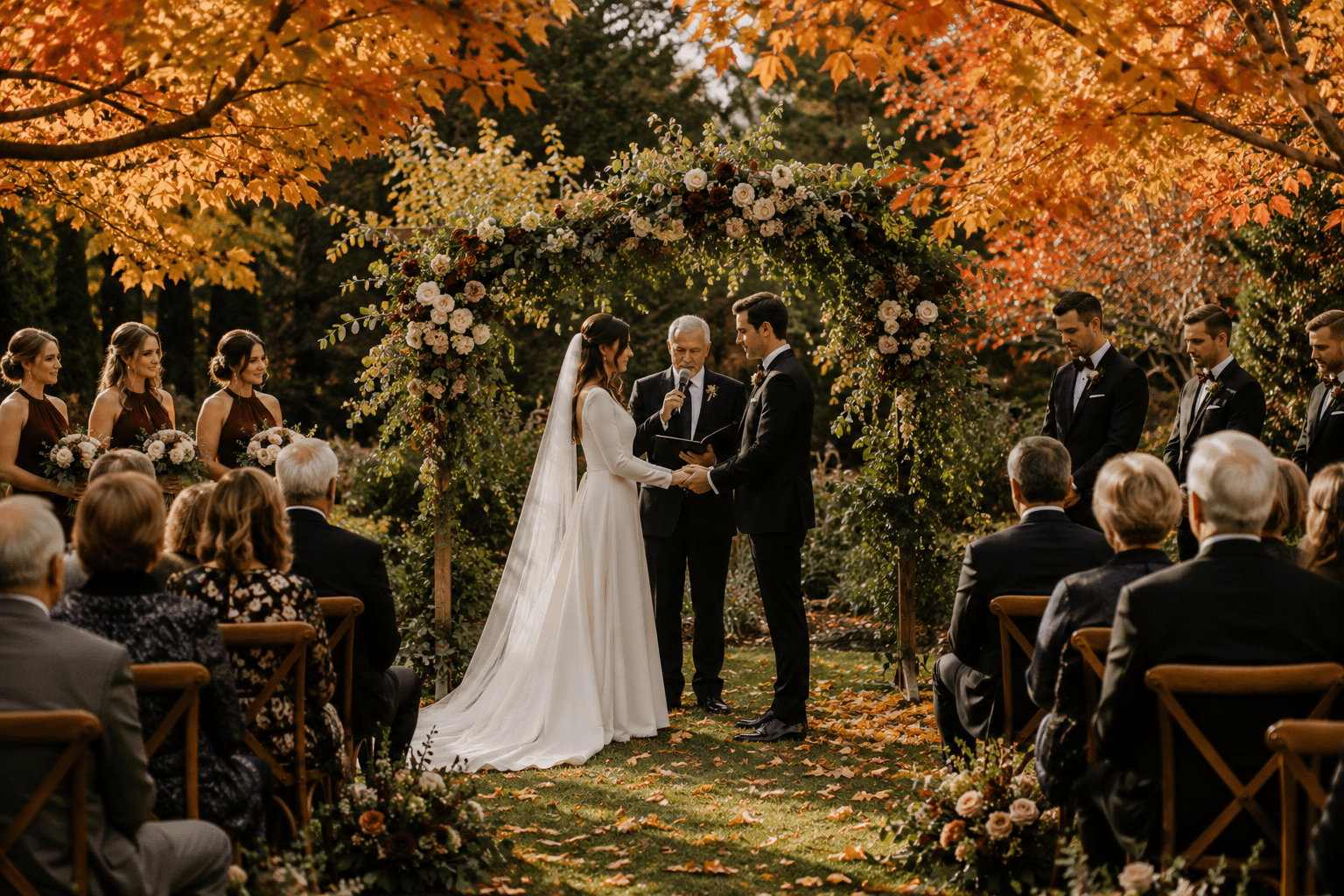
For many couples, autumn is the sweet spot. The fierce heat has eased, days are still warm and settled, and the light turns soft and flattering. Wine country looks spectacular as the vines turn, which is why regions like the Yarra Valley and the Hunter Valley are so popular for autumn celebrations.
Because autumn is so well regarded, prime dates in March and April book out early and often sit at peak rates. If you love the season but want a little breathing room on budget and availability, May can be quieter while still offering lovely conditions across most of the southern and eastern states.
- Pros: mild temperatures, gorgeous foliage and light, comfortable for guests.
- Cons: high demand for the best dates, premium pricing in wine regions.
Winter (June to August)
Winter is the most underrated season for a southern Australian wedding, and it is where the smartest budgets often go. Demand drops, which usually means better availability and more room to negotiate on venues, photographers and accommodation. A cool-climate winter wedding leans into cosy interiors, open fires, rich menus and dramatic skies.
The flip side is short days and a real chance of cold and rain in the south, so an indoor or covered backup is essential. The picture flips completely in the tropical north: winter is the dry season, the most popular time of year to marry in Cairns, the Whitsundays, Broome and Darwin, with warm days, low humidity and clear skies. So winter can be either your value play in the south or your prime season in the north.
- Pros: off-peak pricing and availability in the south, peak conditions in the tropical north, cosy atmosphere.
- Cons: cold and short days down south, higher demand and rates up north.
Spring (September to November)
Spring rivals autumn as the other great all-rounder. Temperatures are climbing but rarely uncomfortable, gardens are in full bloom and the days are lengthening again. It is a beautiful time for outdoor ceremonies in temperate regions, and the wildflowers in Western Australia, including around Margaret River, are a genuine drawcard.
The catch is that spring weather can be changeable, with the occasional cold snap or shower lingering early in the season. Late October and November tend to be more settled. As with autumn, popularity means strong demand and peak pricing for the most sought-after weekends, so book early if your heart is set on a spring date.
- Pros: blooming gardens, mild and brightening days, strong outdoor options.
- Cons: unpredictable early-season weather, peak pricing and competition for dates.
Peak versus off-peak: pricing and availability
Across most of temperate Australia, the peak wedding window runs through autumn and spring, with summer close behind. Saturdays in March, April, October and November are the hardest dates to secure and typically the most expensive. Winter, particularly June and July in the south, is the clear off-peak stretch.
If you are flexible, that flexibility is worth real money. As a rough guide, choosing a winter date, a Friday or Sunday, or even a weekday can meaningfully reduce venue and supplier costs compared with a peak-season Saturday. Long weekends and dates near major public holidays are the exception, as they spike in both demand and price, and they can make travel and accommodation harder for your guests. When you start comparing wedding venues, ask each one directly about peak and off-peak rates, minimum spends and any midweek discounts before you commit.
Region-specific notes: tropical north versus cool south
The single most important rule is to invert your instincts depending on latitude. In the tropical north, build your plans around the dry season from roughly May to September, and steer clear of the wet season and cyclone period over summer. In the cool south, the calculus reverses: spring through autumn gives you the most settled outdoor weather, while winter rewards budget-conscious couples who do not mind, or actively want, a cosy indoor celebration.
The temperate east-coast and inland wine regions sit in the middle, where autumn and spring genuinely shine. Wherever you marry, remember that Australian weather can turn quickly in any season, so a credible wet-weather plan matters far more than chasing a guaranteed forecast.
So, when should you get married?
There is no universal best month. If you want the most reliable warm weather in the south, lean autumn or spring. If you want value and atmosphere, consider a southern winter. If you are heading north, marry in the dry season and you will be rewarded. Match the season to your region, your budget and the feeling you want for the day, and the right date will become obvious.
Frequently asked questions
- What is the most popular month to get married in Australia?
- March, October and November are Australia's most popular wedding months, offering mild autumn and spring weather nationally. December (summer heat and festive clashes) and July (mid-winter) are the least popular — which makes them the most negotiable on price.
- What is the cheapest time to have a wedding in Australia?
- Winter (June to August) and weekday weddings are the cheapest, as venues and suppliers often discount off-peak and mid-week dates. Avoiding long weekends, Christmas and New Year — which attract premiums — will stretch your budget further.
- When is the best time to get married in Queensland?
- Queensland bucks the national trend: its mild, dry winters make June to September the busiest and most comfortable time to marry, while the humid, storm-prone summer is generally avoided for outdoor weddings.