Wedding Directory
Wedding Signage in Australia
Discover Australia's finest wedding signage. Browse profiles and enquire directly with the professionals who'll bring your wedding day to life.
Browse Wedding Signage by location
What to look for in a wedding signage
Wedding signage ties your whole day together, from the welcome sign at the entrance to the seating chart, bar menu and on-the-day directional arrows. Knowing how to choose a wedding signage supplier means weighing design style, materials, finishing and turnaround against your budget and venue rules. Some couples want a single hand-lettered acrylic piece; others need a full coordinated suite. This guide explains what to expect, what is usually included, what tends to cost extra and the red flags to watch for before you book.
What to expect and service levels
Wedding signage suppliers in Australia range from solo calligraphers and hobby makers working from home, through to established design studios and full-service stationers who handle everything from save-the-dates to on-the-day signage. The service level you choose shapes both the price and the experience, so it pays to be clear on what you actually need before you compare quotes.
At the lower end, you might commission a single welcome sign or a seating chart as a one-off, supplying your own wording and a rough idea of the look. Mid-tier suppliers usually offer a curated range of designs you can personalise, with set materials, fonts and colours, plus a couple of proof rounds. Premium and bespoke studios design from scratch to match your invitations, theme and venue, often coordinating a whole signage suite so everything feels cohesive.
Production methods vary widely and affect both finish and turnaround. Common approaches include hand calligraphy or hand-painting, vinyl lettering applied to acrylic or timber, printed boards, and engraved or laser-cut signs. Mirror, acrylic, timber, foamboard and printed card are all popular substrates, each with a different price point and durability. Outdoor and windy coastal or garden venues may need weighted or freestanding options that not every supplier offers.
Turnaround is a key part of service level. Bespoke pieces and hand-lettered work need lead time for design, proofing and drying or curing, while some printed signs can be produced quickly. A good supplier will tell you their realistic timeframe, when they need your final wording and guest list, and whether rush options exist. Delivery, postage of smaller items, and in some cases on-the-day setup and styling, also differ between suppliers, so confirm how your signage reaches the venue and who installs it.
What's usually included
Most wedding signage suppliers include the core design and production of the agreed pieces, along with personalisation of your wording, names and date. For made-to-order and bespoke work, expect at least one or two rounds of digital proofs so you can check spelling, layout and the look before anything is printed or hand-lettered. Checking proofs carefully is your responsibility, so read every name and detail closely.
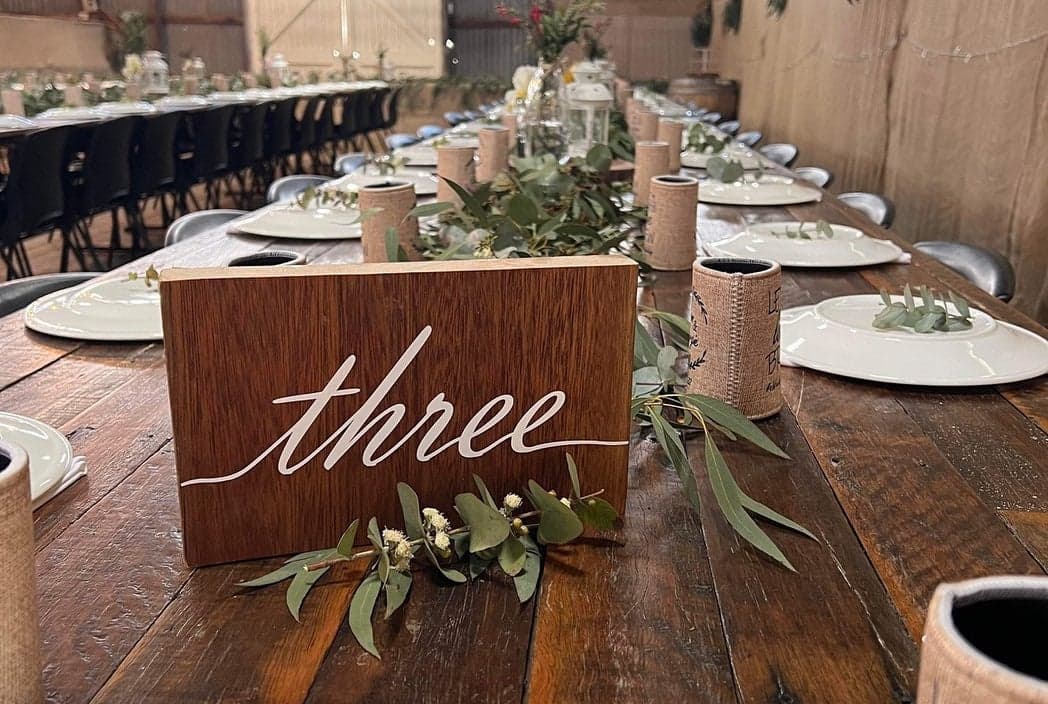
The physical sign itself, in the chosen material and size, is included, as is the lettering or printing applied to it. Suppliers offering acrylic or mirror signs often include the board ready to display, though stands and easels are a common exception. Many makers will also offer guidance on wording, sizing and which pieces are genuinely worth having, which is valuable if you are unsure how much signage your day actually needs.
Basic communication and a clear quote or order confirmation are standard with reputable suppliers, ideally setting out exactly which pieces you are getting, their dimensions, materials and the total cost. Some include local pickup or factor postage of smaller, packable items into the price. For seating charts and table plans, the layout work to arrange your guests into tables is usually part of the service once you supply the final list, though some treat complex layouts as an add-on. Always confirm in writing what your specific package covers, as inclusions differ significantly between a single-item order and a coordinated signage suite.
What's often excluded or costs extra
Plenty of items that feel like part of the sign are frequently charged separately. Stands, easels, frames and weighted bases are common extras, especially for welcome signs and seating charts that need to stand freely outdoors. If your venue is windy or the sign is large, ask whether a sturdier display solution carries an additional cost.
Extra proof rounds beyond the included number, significant design changes after approval, and changes to wording or guest names late in the process can all attract fees. Reprinting or re-lettering a sign because of a guest-list change close to the wedding is a typical extra cost, so lock in your numbers before final production. Rush or express turnaround usually costs more, if it is available at all.
Delivery, freight of larger or fragile pieces, and on-the-day setup, installation and styling are often quoted on top of the signage itself. Some suppliers do not offer setup at all and expect you or your coordinator to transport and display everything. Packing and postage for interstate or regional orders can add up, particularly for heavy materials like timber or framed mirrors.
Additional pieces beyond your initial order, premium materials, custom colours, foil, hand-painting versus vinyl, and larger sizes all push the price up. Hire-versus-buy is another consideration: some suppliers hire reusable signage such as acrylic blanks or easels and may charge a bond and require return in good condition. Read the quote carefully so you understand exactly which of these apply to you.
What to watch out for
The most common signage problem is a typo or wrong name making it to the printed piece, so be wary of any supplier who will not provide a proof before production. Spelling errors, missing guests on a seating chart and incorrect details are difficult and costly to fix once a sign is made, especially with hand-lettered or engraved work that cannot simply be reprinted.
Watch for vague quotes that do not specify sizes, materials, quantities and what is included. Unclear pricing often hides extras for stands, delivery and setup that appear later. Be cautious if a supplier cannot show real photographs of their own finished work rather than stock or inspiration images, and check reviews or testimonials for comments on accuracy, finish quality and meeting deadlines.
Turnaround and communication are genuine risk areas. A maker who is slow to reply during the quoting stage may be hard to reach when you need a final proof approved. Confirm the date they need your final wording and guest list, and what happens if you are late. Also check their cancellation and refund policy, and whether deposits are non-refundable.
Venue rules can catch couples out. Some venues restrict where signage can go, prohibit certain fixings, or have specific access and pack-down times. Confirm display logistics and who is responsible for setting up and removing signage on the day. Finally, beware durability claims for outdoor use; not all materials or adhesives hold up in heat, humidity or wind, so ask how the supplier ensures signs stay legible and upright throughout your event.
Questions to ask your wedding signage
- 1Can I see photos of your own finished signage and any pieces similar to what I want?
- 2What materials and production methods do you use, and which suit an outdoor or windy venue?
- 3Exactly which pieces, sizes and quantities does my quote include, and what is extra?
- 4How many proof rounds are included, and what do changes or extra proofs cost?
- 5When do you need my final wording and guest list, and what happens if there are late changes?
- 6What is your turnaround time, and do you offer rush options if I'm short on time?
- 7Do you deliver, set up and pack down signage on the day, or is that my responsibility?
- 8What are your deposit, cancellation and refund terms, and is signage hire or purchase?
Wedding Signage FAQs
- When should I order my wedding signage?
- Order pieces with fixed details, like welcome signs and the order of events, once those details are locked in, typically a couple of months out. Leave seating charts and table plans until your RSVPs are finalised, but confirm with your supplier exactly when they need the final guest list so there is time for proofing and production before the wedding.
- What wedding signs do most couples actually need?
- Common pieces include a welcome sign, a seating chart or table plan, table numbers, a bar or drinks menu, an order of events, and directional or 'unplugged ceremony' signs. The right mix depends on your venue and style. A good supplier will help you decide what genuinely adds value rather than upselling pieces you won't use.
- Who sets up the signage at the venue on the day?
- It varies. Some suppliers offer delivery, setup, styling and pack-down for an additional fee, while others expect you, a stylist or your coordinator to transport and display everything. Confirm this early, check your venue's access and fixing rules, and make sure someone is clearly responsible for installing and removing each sign.